
There are four common forms of fruit tree pruning and each one will give you different results. Each type of fruit tree will naturally have a different form and you can work with nature by using the best form for the tree variety that you are pruning. So, before you start pruning your fruit trees, ask yourself, “what exactly are you trying to accomplish?” If your trees are mature and they have not received regular pruning you may need to adjust your pruning plan to fit the current structure of your tree.
The four pruning forms are as follows:
- Central Leader
- Modified Leader
- Open Center
- Espalier
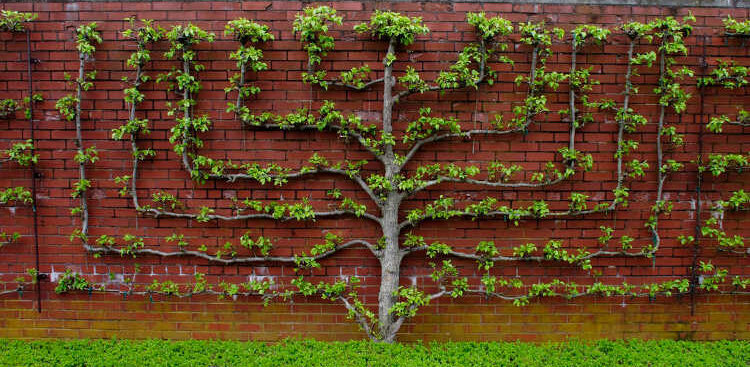
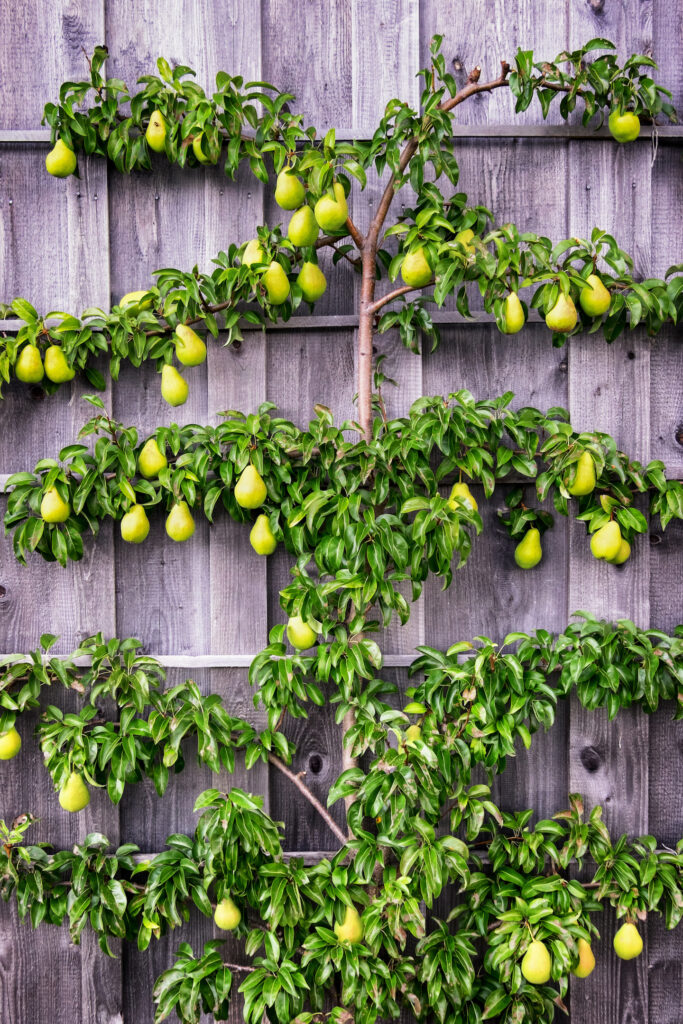
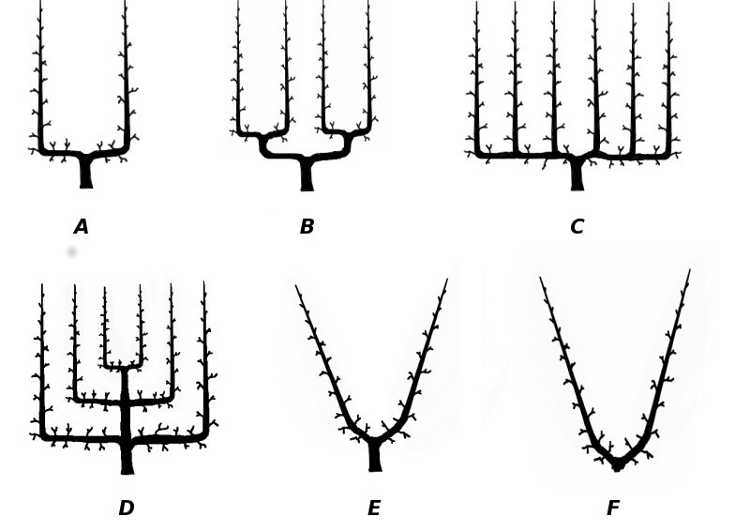
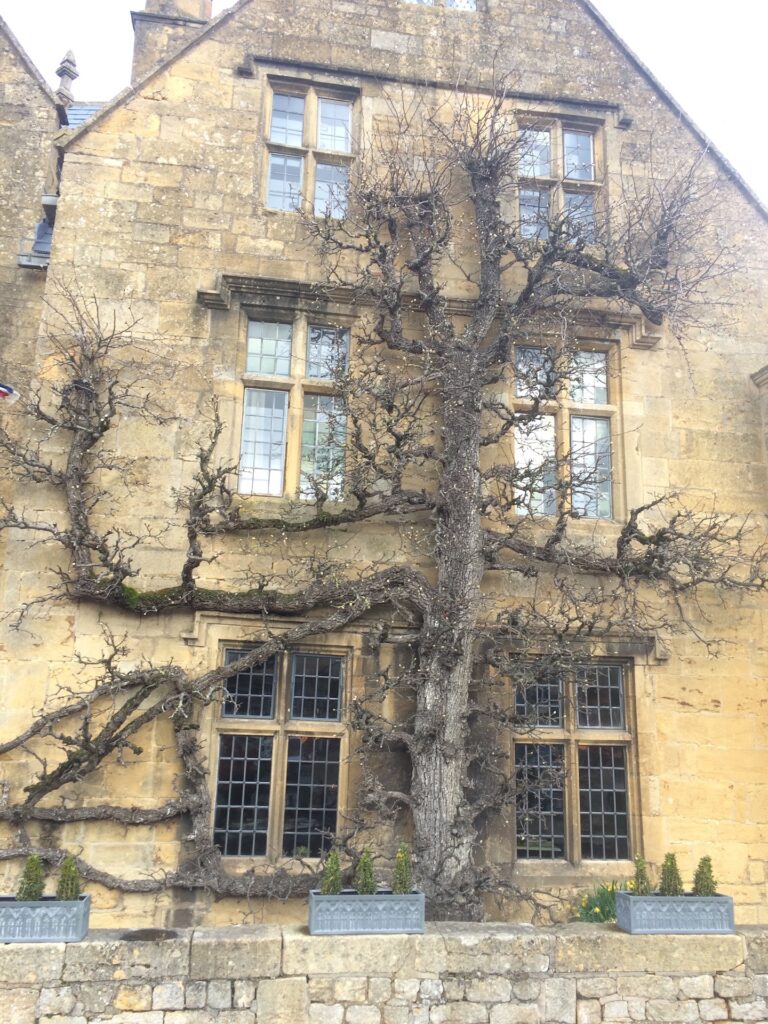
Espalier pruning is a form of pruning where your fruit tree is trained to grow flat against a wall or fence. Espalier pruning is both artistic and productive and a great way to conserve space. Espalier pruning is the most challenging form of the four common pruning forms.
Apple, crabapple, and pear trees are the typical choices but many fruit trees work well to espalier. Apple and pear are traditionally used because their fruiting spurs can produce fruit for many years and the branches are quite pliable when the trees are young, allowing you to train them into the espalier shapes.
Regardless of if you opt to espalier apple trees, another fruiting variety, or an ornamental, keep in mind a couple of things when purchasing a tree.
When choosing trees, a dwarf tree or semi-dwarf variety works the best because of their naturally shorter stature. It’s also best to choose a fast-growing specimen as this will make the training process quicker and easier.
The principle behind espaliering a tree is simple. Plants have a main growing point or stem, known as a leader. If you remove this leader, shoots emerge from buds found on the sides of the stem, and below the cut. You then choose the best side shoots to guide/train them to create the boughs of your espalier tree. The topmost shoot becomes the new leader and, will eventually become the trunk.